Welcoming a new baby into the family is one of life’s most exciting milestones. Along with the joy of parenthood comes a deep responsibility to keep your child safe and protected. New parents spend countless hours researching strollers, car seats, cribs, and baby-proofing products, but one of the most important investments they can make is learning infant CPR.
Emergencies involving babies can happen quickly and without warning. Choking incidents, breathing problems, drowning accidents, allergic reactions, and sudden medical emergencies require immediate action, often before emergency responders can arrive. In those critical moments, parents are usually the first people available to help.
Through CPR Certification, Jacksonville parents can gain the hands-on skills and confidence needed to respond effectively during infant emergencies. While no parent wants to imagine facing such a situation, being prepared can provide peace of mind and potentially save a child’s life.
Infant Emergencies Can Happen Anywhere
Many parents assume that serious medical emergencies are rare or only happen under unusual circumstances. In reality, infant emergencies often occur during normal daily activities.
Common situations include:
- Feeding time
- Bath time
- Playtime
- Family gatherings
- Car rides
- Daycare
- Swimming activities
- Nap time
Babies naturally explore the world around them, but their curiosity and developing motor skills can sometimes place them in dangerous situations.
Learning infant CPR helps parents feel prepared no matter where an emergency occurs.
Choking Is One of the Most Common Infant Emergencies
Infants frequently place objects in their mouths as they learn about their surroundings.
Common choking hazards include:
- Small toys
- Coins
- Buttons
- Grapes
- Popcorn
- Nuts
- Hard candy
- Pieces of household objects
Unlike adults, infants have much smaller airways, meaning even tiny objects can create serious obstructions.
Infant CPR classes teach parents how to:
- Recognize choking signs
- Perform infant back blows
- Deliver chest thrusts
- Assess breathing
- Know when to call 911
Quick intervention can often prevent a choking incident from becoming life-threatening.
Infant CPR Is Different From Adult CPR
One reason professional instruction is so valuable is that infant CPR uses techniques specifically designed for babies under one year old.
Infant CPR differs from adult CPR in several important ways:
- Hand placement
- Compression depth
- Compression force
- Rescue breathing technique
- Choking response procedures
Using adult CPR methods on an infant may not provide effective care.
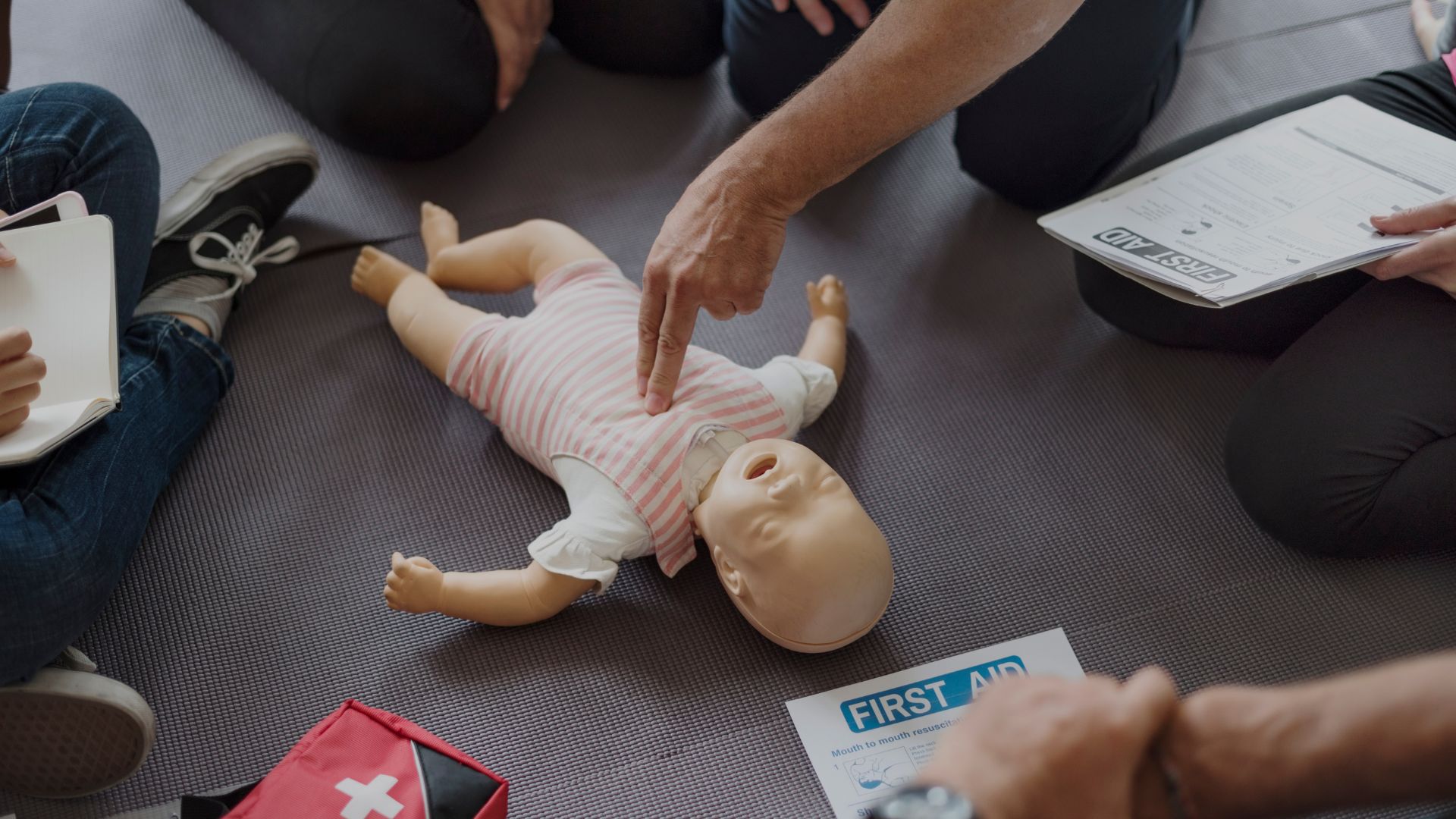
Hands-on instruction through CPR Certification helps parents learn the proper techniques using infant training manikins and guided practice.
Drowning Risks Are Higher Than Many Parents Realize
Jacksonville’s warm climate and abundance of pools, beaches, rivers, and water activities make water safety especially important for families.
Many parents think drowning only happens during swimming, but infants can drown in very small amounts of water.
Potential hazards include:
- Bathtubs
- Kiddie pools
- Backyard pools
- Buckets
- Decorative ponds
- Beach outings
Drowning incidents are often silent and can happen in seconds.
Infant CPR training prepares parents to respond immediately if a child is pulled from the water and is not breathing normally.
Every Minute Matters During Breathing Emergencies
Infants require oxygen more quickly than older children and adults because of their developing bodies and smaller airways.
Breathing emergencies may result from:
- Choking
- Allergic reactions
- Respiratory illness
- Near drowning
- Suffocation
- Medical conditions
Without oxygen, serious complications can develop within minutes.
CPR training teaches parents how to recognize breathing problems early and begin emergency care while waiting for professional responders.
Jacksonville Families Enjoy Active Outdoor Lifestyles
Life in Jacksonville often includes outdoor recreation, family gatherings, and trips to local parks and beaches.
Popular family activities may include:
- Beach outings
- Pool parties
- Boating
- Community festivals
- Picnics
- Youth sports events
While these activities create wonderful memories, they also present situations where accidents can occur unexpectedly.
Parents who complete training through CPR Certification often feel more confident enjoying these activities because they know they have valuable emergency response skills.
Grandparents and Caregivers Should Learn Infant CPR Too
Parents are not always the only people caring for a baby.
Other caregivers often include:
- Grandparents
- Babysitters
- Daycare providers
- Nannies
- Aunts and uncles
- Family friends
Anyone who regularly watches an infant can benefit from CPR training.
Many Jacksonville families choose to attend classes together so that multiple caregivers know how to respond during emergencies.
Having several trained adults increases the likelihood that someone knowledgeable will be present when help is needed.
CPR Training Helps Parents Stay Calm
One of the biggest challenges during an emergency is panic.
Without training, people often:
- Freeze
- Feel overwhelmed
- Forget basic steps
- Delay calling for help
- Lose confidence
Hands-on CPR classes allow parents to repeatedly practice emergency procedures in a controlled environment.
This practical experience helps build confidence and gives parents a clear action plan if an emergency ever occurs.
Preparedness often leads to calmer, faster decision-making.
Learning the Warning Signs of Infant Distress
Many emergencies begin with subtle symptoms that can easily be overlooked.
Parents should watch for signs such as:
- Difficulty breathing
- Weak crying
- Blue or gray lips
- Unresponsiveness
- Persistent coughing
- Sudden limpness
- Extreme lethargy
Recognizing these warning signs early can help parents seek emergency medical care before a situation becomes more serious.
Infant CPR courses often include guidance on identifying medical distress and understanding when immediate intervention is necessary.
Emergency Responders Need Time to Arrive
Jacksonville has highly trained emergency medical professionals, but even the fastest response teams require time to reach the scene.
During those first critical minutes:
- Oxygen levels may drop.
- Brain function may be affected.
- A child’s condition may worsen.
Parents become the first responders until EMS arrives.
CPR helps maintain circulation and oxygen delivery during those vital moments.
Safe Sleep Practices and Emergency Preparedness Go Together
Safe sleep recommendations help reduce risks for infants, but parents should also know how to respond if a baby experiences a breathing emergency.
CPR training complements safe sleep education by teaching:
- Rescue breathing
- Infant assessment
- Emergency response procedures
- When to activate EMS
Combining prevention with preparedness creates a stronger overall approach to infant safety.
Infant CPR Builds Parenting Confidence
Many parents report that CPR training provides more than emergency skills.
Learning infant CPR often helps parents:
- Feel more prepared
- Reduce anxiety
- Gain confidence
- Improve overall safety awareness
- Better understand infant emergencies
While no parent hopes to use these skills, simply knowing what to do can bring peace of mind.
CPR Classes Often Include Additional Safety Skills
Many infant CPR courses also cover related emergency topics.
Training may include:
- Choking response
- Basic First Aid
- Emergency scene assessment
- AED awareness
- Injury prevention
- Emergency communication
These additional skills help parents prepare for a wider range of situations they may encounter during early childhood.
Hands-On Practice Makes a Difference
Watching videos and reading articles about infant CPR can be informative, but physical practice helps build confidence and muscle memory.
Hands-on instruction allows parents to:
- Practice chest compressions
- Perform rescue breaths
- Work through emergency scenarios
- Receive instructor feedback
- Learn proper hand positioning
Students who complete practical training through CPR Certification often feel significantly more prepared to respond during actual emergencies.
CPR Skills Last Beyond Infancy
Although infant CPR focuses on babies under one year old, many parents continue their emergency preparedness journey by learning child CPR and First Aid as their children grow.
These life-saving skills remain valuable throughout every stage of parenthood and may even help protect friends, relatives, or complete strangers.
A small investment of time today can provide benefits for many years to come.
Final Thoughts About Infant CPR Training for New Parents in Jacksonville
Becoming a parent means preparing for the unexpected, and few preparations are more valuable than learning infant CPR. From choking incidents and breathing emergencies to drowning accidents and sudden medical crises, babies face unique risks that require specialized emergency response techniques.
Through CPR Certification, Jacksonville parents can gain the hands-on skills, confidence, and practical experience needed to respond quickly when every second matters. While no one wants to imagine facing an infant emergency, being prepared can provide peace of mind and help parents protect what matters most.
Infant CPR training is not simply another class. It is an investment in your child’s safety and your family’s future.
Frequently Asked Questions About Infant CPR Training for New Parents in Jacksonville
When should new parents take an infant CPR class?
Many parents choose to complete infant CPR training during pregnancy, but it is beneficial at any time before or after a baby arrives.
Is infant CPR different from adult CPR?
Yes. Infant CPR uses specialized techniques that account for a baby’s smaller body size and unique anatomy.
What should I do if my baby is choking?
If your baby cannot breathe, cry, or cough, begin infant choking procedures and call 911 immediately.
Should grandparents and babysitters learn infant CPR?
Absolutely. Anyone who regularly cares for an infant should understand how to respond during an emergency.
How long does infant CPR certification last?
Most CPR certifications remain valid for two years before renewal is recommended.
Does infant CPR training include choking response?
Yes. Most courses teach both infant CPR and proper techniques for responding to choking emergencies.
Can infant CPR help during drowning emergencies?
Yes. Infant CPR training prepares parents to respond if a baby is rescued from the water and is not breathing normally.
Will CPR training make me feel more confident as a new parent?
Many parents report feeling significantly more prepared and less anxious after completing hands-on infant CPR training.